
The rivalry between the Boston Red Sox and New York Yankees is one of the most storied, emotional, and intense rivalries in sports history. Rich with decades of iconic moments, heroic plays, and legendary players, the rivalry is defined as much by the allegiance of its stars as it is by their performance. When a beloved player crosses the divide from Fenway Park to Yankee Stadium—or vice versa—the move inevitably sparks heartbreak, anger, and feelings of betrayal. The latest chapter of this passionate narrative unfolded dramatically with star third baseman Rafael Devers forcing his departure from Boston to join their archrivals, the New York Yankees.
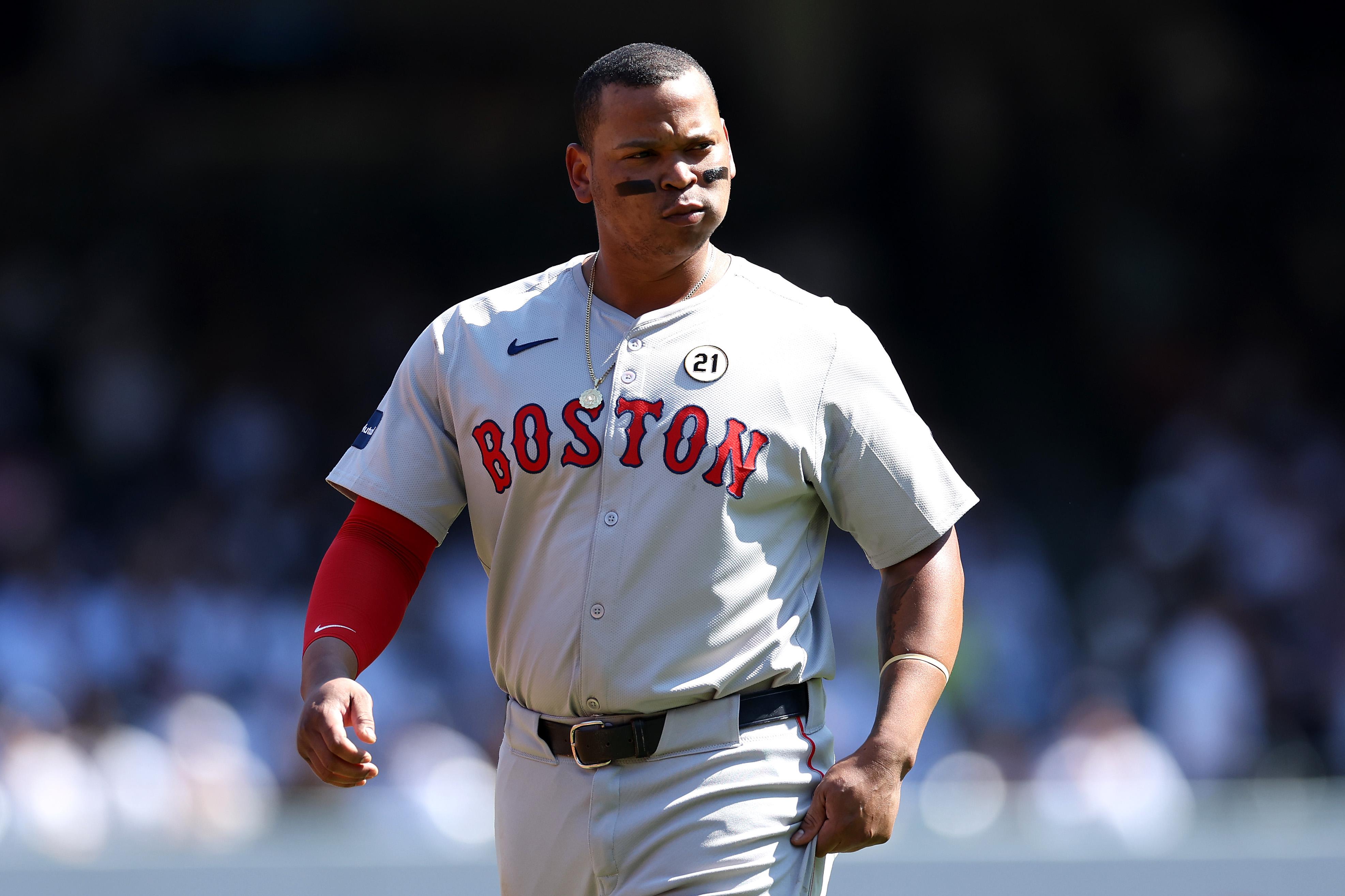
Rafael Devers, affectionately known as “Raffy,” had become a cornerstone of the Red Sox franchise. Signed as an international free agent in 2013 and debuting in the Major Leagues in 2017 at just 20 years old, Devers rapidly ascended to stardom. His powerful bat, dynamic energy, and infectious smile endeared him deeply to Boston fans. He quickly established himself as a clutch hitter, responsible for numerous memorable moments, including key hits in high-stakes postseason matchups and record-breaking performances that etched his name into Red Sox lore. Fans loved him not just for his talent but for his apparent genuine love for the game and allegiance to the city itself.
This made his abrupt exit even more shocking and painful. Reports emerged suggesting tension between Devers and the Red Sox front office over contract negotiations. While the media debated salary figures and contract lengths, few imagined that the disagreements would culminate in Devers actively forcing his way out—much less joining the Yankees. To Boston fans, such a move was not merely a career decision; it was an emotional betrayal. Social media exploded with disbelief, anger, and sadness as fans grappled to reconcile their admiration for Devers with their frustration at his decision.
Historically, defections between these two clubs have always been controversial. Babe Ruth’s infamous sale from Boston to New York in 1919, known as the “Curse of the Bambino,” haunted Red Sox fans for decades. Roger Clemens’ departure to the Yankees in the late 1990s also left a bitter taste in the mouths of Sox fans who had cheered him through his most dominant seasons. Johnny Damon’s move to the Yankees after leading the Red Sox to a historic World Series victory in 2004 was another deeply painful defection that still resonates. Devers’ decision now joins this dubious list, instantly becoming one of the rivalry’s most controversial and emotionally charged transfers.
Why would Rafael Devers, a player celebrated by both fans and teammates, choose to leave a city and franchise that seemed tailor-made for his success? Sources close to the situation suggest that Devers’ decision was rooted in both financial considerations and a perceived lack of commitment from Boston’s management. The Red Sox front office, after recent years of hesitant spending and controversial roster decisions, reportedly failed to present Devers with a long-term contract that reflected his market value and contributions. Feeling undervalued and underappreciated, Devers and his representatives began exploring alternative destinations.
The Yankees, always in the market for premier talent and eager to capitalize on any opportunity to weaken their rivals, quickly emerged as serious contenders. With their legendary ability to leverage financial resources and their appeal as perennial contenders, the Yankees offered Devers both the stability of a lucrative long-term deal and the promise of regular postseason baseball. The prospect of playing at Yankee Stadium, with its shorter right-field porch ideally suited to his powerful left-handed swing, provided additional incentive for the young slugger.
Yet, beyond the financial and strategic considerations, Devers’ decision highlights broader issues within the Red Sox organization. Boston fans and analysts alike have expressed increasing frustration with the team’s recent trajectory, characterized by cautious spending, controversial roster moves, and inconsistent results. The inability or unwillingness to retain homegrown stars like Mookie Betts and Xander Bogaerts had already strained fan loyalty. With Devers’ departure, many see not just a betrayal by the player but a fundamental failure by ownership and management to prioritize and reward their homegrown talent.

From a purely baseball perspective, Devers’ move dramatically shifts the power dynamic within the American League East. The Yankees, already a talent-rich team, significantly bolster their lineup with Devers’ consistent hitting and clutch abilities.
His presence in the heart of the Yankees’ batting order will undoubtedly provide protection and additional opportunities for their existing stars, such as Aaron Judge and Giancarlo Stanton. Simultaneously, his departure leaves a glaring hole in Boston’s lineup and significantly weakens their offensive capabilities, potentially setting them back several seasons as they attempt to recover.
The emotional impact on the Red Sox fanbase cannot be overstated. Baseball fans, especially in Boston, tend to form deep personal connections with their players. The feeling of betrayal is intensified when a player moves directly to a bitter rival.
For fans, seeing Devers don the iconic pinstripes will be an emotionally charged spectacle, evoking memories of previous defections and exacerbating feelings of frustration towards Red Sox ownership. It is likely that Devers’ first return to Fenway Park as a Yankee will be met with a mix of sorrow, anger, and nostalgia—a poignant reminder of what might have been.
Yet, at its core, baseball is a business. Players’ careers are finite, and decisions regarding their futures often involve complex considerations beyond simple loyalty. Rafael Devers’ decision, while painful for Boston fans, underscores deeper issues within the Red Sox organization and the modern dynamics of professional sports contracts. It also adds another compelling layer to the already rich tapestry of the Yankees-Red Sox rivalry—a narrative of talent, loyalty, ambition, and heartbreak.
In the end, Rafael Devers’ defection to the Yankees is more than just a transfer of talent. It is a moment that encapsulates the complexities of modern sports, the emotional investment fans place in their heroes, and the harsh realities of professional baseball. Devers, once a beloved hero in Boston, now becomes one of its most controversial figures. His decision to cross the rivalry line has forever altered his legacy and intensified a rivalry that continues to define baseball itself.
News

NEW YORK GIANTS: Star Rookie WR Malik Nabers, doesnt like the current QB Room. “Thought we were taking this offseason seriously” -Malik Nabers After NY Giants signed QB’s Russell Wilson and Jameis Winston ahead of 2025 NFL Draft.
Malik Nabers and the Giants’ Quarterback Controversy: A Look at the Current Situation The New York Giants have always been…

BREAKING NEWS: Dak Prescott makes controversial statement after leaving Cowboys: ‘They don’t value me here, I’m gonna…’
Dallas, TX – The NFL world was rocked early this morning, March 22, 2025, when Dallas Cowboys quarterback Dak Prescott…

Yankees SHOCK Baseball World with Manny Machado ACQUISITION!
The New York Yankees have sent shockwaves throughout the baseball world with the stunning announcement that they have acquired Manny…

BASEBALL EARTHQUAKE: Francisco Lindor ABANDONS Mets for $341 MILLION Yankees contract
BASEBALL EARTHQUAKE: Francisco Lindor ABANDONS Mets for $341 MILLION Yankees contract – The End of an Era in Queens In…

UNPRECEDENTED GRIEF: The GREATEST LOSS in New York Yankees history JUST HAPPENED
The New York Yankees’ Pitching Crisis: A Season Hanging in the Balance The New York Yankees, one of Major League…

CONTRACT FINALIZED: Manny Machado SIGNS THREE-YEAR DEAL with Yankee
CONTRACT FINALIZED: Manny Machado SIGNS THREE-YEAR DEAL with Yankees – A Seismic Shift in the MLB Landscape In a move…
End of content
No more pages to load