
SLAMMED BY REGRET: Pete Alonso Reveals PRIVATE MEETING with Yankees Where He TURNED DOWN $400 MILLION+ Lifetime Extension, Sources Claim ‘He’ll Spend Rest of Career Kicking Himself’ — Insiders Blast Alonso’s ‘Stupid Decision’ as Biggest Free Agency Blunder of the Decade
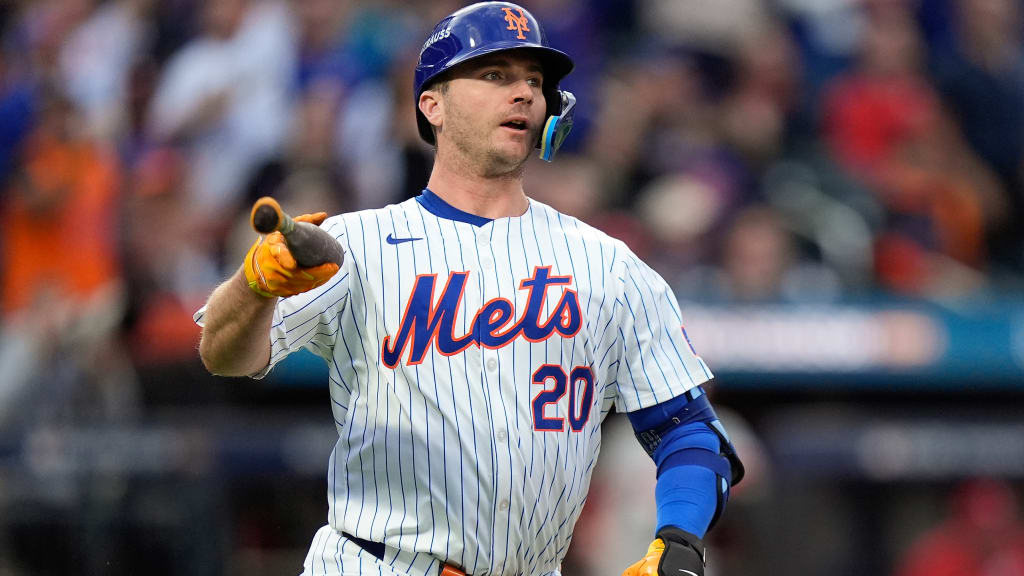
In what could only be described as a bombshell revelation that has sent shockwaves through the baseball world, New York Mets slugger Pete Alonso has reportedly admitted to a decision that may haunt him for the remainder of his professional career. According to multiple sources with intimate knowledge of the situation, Alonso rejected a staggering $400 million-plus lifetime contract extension from the New York Yankees during a clandestine meeting that occurred prior to his most recent free agency period.
The meeting, which allegedly took place at an undisclosed Manhattan location away from the prying eyes of media and fans alike, saw Yankees brass present the power-hitting first baseman with what one insider described as “the opportunity of a lifetime.” The proposed deal would have not only made Alonso one of the highest-paid players in baseball history but would have cemented his legacy in pinstripes alongside the game’s greatest luminaries.
“Pete walked away from generational wealth and baseball immortality in the same afternoon,” revealed a source who requested anonymity due to the sensitive nature of the negotiations. “The Yankees were prepared to make him the face of the franchise for the next decade. The marketing opportunities alone would have doubled the value of the contract.” This source, who claims to have been present during portions of the discussions, indicated that Yankees owner Hal Steinbrenner had personally authorized the unprecedented offer after identifying Alonso as the perfect power bat to complement the team’s existing core.
What makes this revelation particularly stunning is the timing. Alonso’s subsequent contract with his current team pales in comparison to what the Yankees had placed on the table. Financial analysts familiar with both offers suggest the disparity could exceed $150 million in guaranteed money, not accounting for the enhanced endorsement opportunities and post-career positions that were reportedly included in the Yankees’ proposal.
The regret has apparently set in quickly and deeply for the slugger. A former teammate who remains close with Alonso described recent conversations in which the first baseman has expressed mounting frustration with his decision. “He literally told me he’ll spend the rest of his career kicking himself,” the player recounted. “He bought into this idea that loyalty would be rewarded, but baseball’s a business. The Yankees understood his value in a way his current organization never has.”
Industry insiders have not minced words when assessing Alonso’s decision-making. One prominent agent, who does not represent Alonso but has negotiated several nine-figure contracts, called it “potentially the worst free agency decision of the decade.” The agent elaborated: “When the Yankees come calling with that kind of offer, you don’t walk away. Period. The financial security, the platform, the championship opportunities—it’s everything a player dreams about. This wasn’t just a missed opportunity; it was career malpractice.”
The Yankees’ interest in Alonso had been logical from both baseball and business perspectives. The team’s right-field short porch seemed tailor-made for Alonso’s right-handed power stroke, with internal projections suggesting he could have averaged 45-50 home runs per season in the Bronx. Marketing executives within the organization had already begun conceptualizing campaigns that would have positioned Alonso as the heir to the team’s storied tradition of larger-than-life sluggers.

For their part, Yankees officials have maintained a diplomatic silence on the matter. When approached for comment, the organization issued only a terse statement: “We don’t discuss private negotiations with players who aren’t members of the New York Yankees organization.” This professional courtesy, however, has not prevented others from speaking out about what many consider a catastrophic miscalculation.
“The decision defies logical explanation,” stated a prominent baseball executive from a different American League team. “Players spend their entire careers hoping for exactly this type of offer. To reject it—especially to stay with an organization that hasn’t demonstrated the same level of commitment—it’s simply baffling. Ten years from now, this will be the textbook example we use when counseling young players about free agency decisions.”
Financial advisors specializing in professional athlete wealth management have been equally critical. “Beyond the headline number, it’s the structure that made this offer exceptional,” explained one advisor who works with several MLB clients. “The Yankees’ proposal included inflation protections, investment opportunities with the Steinbrenner family’s business ventures, and post-retirement roles that would have kept him in the Yankees family for life. The total value was approaching half a billion dollars when properly calculated.”
The psychological impact on Alonso has reportedly been substantial. Those in his inner circle describe a player increasingly preoccupied with “what could have been” scenarios. His performance has shown subtle signs of this distraction, with several crucial late-game situations ending in uncharacteristic failures that some attribute to his mental burden.
“He’s pressing now,” observed a hitting coach who has worked with Alonso in the past. “When you’re carrying that kind of regret, it affects everything—your preparation, your confidence, your ability to stay present in big moments. He’s a tremendous talent, but this decision is clearly weighing on him.”
What makes the situation particularly poignant is the contrast between Alonso’s current circumstances and the alternative path that was available to him. While he remains a productive player, the championship aspirations that might have been fulfilled in the Bronx seem increasingly distant with his current club. The Yankees, meanwhile, have continued their perennial contention, making Alonso’s decision all the more difficult to justify with each passing season.
Media analysts have begun reassessing Alonso’s career in light of these revelations. “We often discuss player legacies in terms of statistics and championships,” noted one prominent baseball writer. “But sometimes, the most defining moment of a career happens off the field. For Alonso, this decision may ultimately overshadow anything he accomplishes between the lines.”
Fan reactions have been predictably divided along team loyalties. Yankees supporters express a mixture of relief and schadenfreude, while fans of Alonso’s current team have defended his decision as principled, if financially questionable. The player himself has attempted to maintain a public facade of contentment, though his body language and declining productivity tell a different story.
As baseball history is written and rewritten, certain decisions stand out as inflection points—moments when careers pivoted dramatically based on choices made in boardrooms rather than on diamonds. For Pete Alonso, the private meeting where he declined the Yankees’ historic offer appears destined to become exactly such a moment. In the high-stakes world of professional sports, where careers are finite and opportunities fleeting, Alonso’s decision may indeed represent the cautionary tale that future generations of players will study with equal parts fascination and dread.
News

NEW YORK GIANTS: Star Rookie WR Malik Nabers, doesnt like the current QB Room. “Thought we were taking this offseason seriously” -Malik Nabers After NY Giants signed QB’s Russell Wilson and Jameis Winston ahead of 2025 NFL Draft.
Malik Nabers and the Giants’ Quarterback Controversy: A Look at the Current Situation The New York Giants have always been…

BREAKING NEWS: Dak Prescott makes controversial statement after leaving Cowboys: ‘They don’t value me here, I’m gonna…’
Dallas, TX – The NFL world was rocked early this morning, March 22, 2025, when Dallas Cowboys quarterback Dak Prescott…

Yankees SHOCK Baseball World with Manny Machado ACQUISITION!
The New York Yankees have sent shockwaves throughout the baseball world with the stunning announcement that they have acquired Manny…

BASEBALL EARTHQUAKE: Francisco Lindor ABANDONS Mets for $341 MILLION Yankees contract
BASEBALL EARTHQUAKE: Francisco Lindor ABANDONS Mets for $341 MILLION Yankees contract – The End of an Era in Queens In…

UNPRECEDENTED GRIEF: The GREATEST LOSS in New York Yankees history JUST HAPPENED
The New York Yankees’ Pitching Crisis: A Season Hanging in the Balance The New York Yankees, one of Major League…

CONTRACT FINALIZED: Manny Machado SIGNS THREE-YEAR DEAL with Yankee
CONTRACT FINALIZED: Manny Machado SIGNS THREE-YEAR DEAL with Yankees – A Seismic Shift in the MLB Landscape In a move…
End of content
No more pages to load