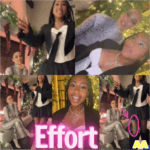
Rihanna has built an empire not just through her music but also through her iconic style and bold artistic vision. However, it seems that someone may have crossed the line between inspiration and imitation—South African rising star Tyla.
Rumors are swirling that Rihanna has taken issue with Tyla allegedly stealing elements of her song and copying her signature aesthetic. And now, the Barbadian superstar is making it clear: originality matters.

The Accusation: Is Tyla Copying Rihanna?
Tyla, best known for her global hit Water, has quickly risen to fame, gaining comparisons to some of the biggest names in the industry, including Rihanna. While being compared to an icon is often a compliment, it appears that things have taken a more serious turn. Reports suggest that Rihanna is unhappy with what she perceives as Tyla’s blatant imitation of her sound and style.
One particular song from Tyla’s catalog has sparked controversy, with fans pointing out striking similarities to Rihanna’s past hits. The beat, vocal delivery, and even certain melodic elements bear a resemblance to Rihanna’s signature style—leading to accusations of artistic theft. On top of that, Tyla’s recent fashion choices and overall aesthetic have fueled speculation that she is borrowing heavily from Rihanna’s image.
Rihanna’s Warning: A Call for Originality
Rihanna, known for being both fierce and outspoken, reportedly addressed the situation with a warning that sent shockwaves through the industry. While she didn’t explicitly call out Tyla by name, a cryptic social media post had fans connecting the dots. Rihanna wrote:
“Being inspired is cool. Stealing? Not so much. We work too hard to be original for others to take shortcuts.”
This subtle yet sharp message set the internet ablaze. Fans immediately speculated that she was referring to Tyla, given the timing and the growing chatter about their similarities. Many praised Rihanna for standing up for artistic integrity, while others debated whether Tyla was truly copying or simply drawing influence from one of her idols.
Fans React: Debate Over Influence vs. Imitation
The situation has divided fans, with some defending Tyla and others backing Rihanna’s stance. Some argue that the music industry thrives on influence and evolution, and that younger artists naturally take inspiration from those who came before them. Others, however, believe there’s a fine line between being influenced by an artist and outright mimicking their work.
One Twitter user wrote, “Rihanna has every right to speak up. She created a whole vibe that’s uniquely hers. Tyla needs to find her own lane.” Another countered, “Everyone takes inspiration from someone. Rihanna herself was influenced by past artists. This is just how music works.”

The Bigger Picture: Artistic Integrity in Music
This controversy raises a larger question about originality in the music industry. Where does the line between influence and imitation lie? Artists like Rihanna have spent years crafting their unique sound and image, and they expect their creativity to be respected. While newer artists naturally absorb inspiration from those who paved the way, they must also bring their own unique twist to the table.
Whether or not Rihanna and Tyla will directly address the issue remains to be seen, but one thing is certain: Rihanna has made it clear that she values originality above all else. And if there’s one thing we know about her, it’s that she won’t hesitate to protect her legacy.
The music industry has long been a space where creativity and originality reign supreme, yet it is also a realm where accusations of plagiarism and artistic theft often surface. Recently, a high-profile clash has emerged between two prominent figures in the entertainment world: Rihanna, the iconic singer and entrepreneur, and Tyla Yaweh, a rising star whose career has been marked by comparisons to the “Diamonds” hitmaker. The controversy centers on allegations that Tyla has not only copied Rihanna’s visual style but also replicated elements of her music, prompting Rihanna to issue a public warning. This incident raises critical questions about artistic integrity, the ethics of inspiration versus imitation, and the challenges of maintaining originality in an era of rapid cultural exchange.
Rihanna, a trailblazer known for her bold fashion choices and genre-defying music, has long been a symbol of self-expression. Her influence spans decades, from her early pop anthems to her later explorations into R&B and avant-garde aesthetics. Tyla Yaweh, a younger artist whose music blends Afrobeats with contemporary pop, has gained traction in recent years, drawing attention for her vocal style and fashion sense. Critics and fans alike have noted striking similarities between Tyla’s appearance and Rihanna’s iconic looks, particularly from her early career. Social media platforms have been flooded with side-by-side comparisons, highlighting how Tyla’s outfits, hairstyles, and even her performance choreography mirror Rihanna’s earlier work. The resemblance has led many to question whether Tyla’s aesthetic is an homage or an intentional copy.
The controversy escalated further when rumors began circulating about Tyla’s alleged replication of Rihanna’s music. Reports suggested that Tyla’s team had sampled or closely mimicked elements from Rihanna’s unreleased tracks, sparking accusations of unauthorized use. While the specifics remain unverified, the claims have intensified scrutiny over the boundaries of artistic influence. In the music industry, the line between inspiration and plagiarism is often blurry, but legal standards are clear: unauthorized use of copyrighted material constitutes theft. Rihanna’s camp has reportedly taken the matter seriously, with her team issuing a formal warning to Tyla’s representatives. The public nature of the dispute has positioned it as a test case for how artists navigate intellectual property rights in an age where digital sharing is instantaneous.
Tyla’s response has been met with mixed reactions. On one hand, she has acknowledged Rihanna’s influence, stating that she admires the singer’s work and considers her a role model. Many artists, particularly those from similar cultural backgrounds, draw inspiration from predecessors, and Tyla’s statements could be interpreted as an attempt to frame her choices as part of a natural creative lineage. However, critics argue that admiration crosses into appropriation when it erases the original creator’s contribution. The situation is further complicated by the cultural context: Rihanna’s influence on global pop music is undeniable, and Tyla’s Afrobeats-infused style has resonated with audiences in a way that echoes Rihanna’s own fusion of West African rhythms with mainstream pop. Yet, the question remains whether Tyla’s approach has gone beyond inspiration and into imitation.
The incident has reignited debates about cultural borrowing versus theft. In the music industry, artists often sample or reference each other’s work, but these practices are typically governed by respect and compensation. When sampling, artists obtain licenses or credit the original creators, ensuring that the source material is acknowledged. Tyla’s alleged use of Rihanna’s unreleased tracks, if proven true, would violate these norms, stripping Rihanna of both credit and potential revenue. The situation underscores the vulnerability of artists whose work is exploited before it can be formally released, highlighting systemic issues in the industry’s protection of intellectual property.
Rihanna’s stance on the matter reflects her history of advocating for artistic ownership. Over her career, she has been vocal about the importance of supporting Black creators and protecting their intellectual property. Her partnership with her lingerie brand Savage X Fenty, which celebrates body positivity and diversity, aligns with her broader mission to empower marginalized voices. By confronting Tyla, Rihanna is not only defending her own work but also reinforcing a standard of accountability in the industry. This approach contrasts with some artists who avoid public disputes, opting instead for private legal battles. Rihanna’s decision to address the issue publicly suggests a desire to set a precedent for transparency and respect.
The music industry’s response has been polarized. Some fans and industry insiders have rallied behind Rihanna, emphasizing the need to protect creators from exploitation. Others argue that the music business thrives on evolution and that all artists build on existing ideas. The debate touches on the nature of creativity itself—is it inherently collaborative, or must it be fiercely original? The case also highlights the power dynamics at play. As an established artist with significant influence, Rihanna has the resources to confront such issues, whereas newer artists may face pressure to mimic trends to gain traction. Tyla’s situation raises questions about the challenges facing rising stars who walk the fine line between homage and appropriation.
Legal experts have weighed in on the potential implications. Copyright law protects original musical compositions and recordings, but proving infringement requires demonstrating both access to the original work and substantial similarity. If Rihanna’s team can prove that Tyla’s team accessed her unreleased tracks, they may have grounds for a lawsuit. However, the process is often lengthy and complex, particularly in cases involving unauthorized sampling. Meanwhile, the public fallout could damage Tyla’s reputation, regardless of the legal outcome. The incident serves as a cautionary tale about the risks of cutting corners in the pursuit of success.
The broader cultural conversation extends beyond these two artists. In an era where social media algorithms prioritize trends over originality, there is growing concern about the devaluation of creative labor. Platforms like TikTok and Instagram reward viral content, encouraging creators to produce work that mimics what is already popular. This environment can stifle innovation and disproportionately harm marginalized artists whose contributions are often borrowed without acknowledgment. Rihanna’s confrontation with Tyla, while specific to their situation, speaks to a larger struggle for recognition and fair compensation in the digital age.
For younger artists, the controversy offers a lesson in the importance of authenticity. While inspiration is inevitable, the key lies in transforming borrowed elements into something new and personal. Tyla’s supporters argue that her style is a product of her cultural background and individual expression, but the backlash underscores the necessity of distinguishing between inspiration and imitation. The music industry’s evolution demands that artists find their unique voice while respecting the origins of their influences.
As the story unfolds, its resolution will likely shape how future disputes over artistic integrity are handled. Whether through legal action, public dialogue, or industry reforms, the incident has forced a reckoning with the ethics of creativity. For Rihanna, the fight is personal but also a call to action for the industry to uphold the rights of creators. For Tyla, it is a lesson in navigating the pressures of fame while maintaining integrity. Ultimately, the clash between these two artists serves as a reminder that art, at its best, is built on respect—for the past, for the present, and for the creative spirit that drives it forward.
News
BOMBSHELL ANNOUNCEMENT: Simone Biles and Jonathan Owens Reveal Surprise Pregnancy in Adorable Photoshoot – You Won’t Believe the Cute Way They Broke the News!
Olympic Gymnast Simone Biles and NFL Player Jonathan Owens: They Announce Their Pregnancy with a Heartwarming, Picture-Perfect Photoshoot Showcasing Biles’…
SHOCKING VIDEO: You Won’t Believe What Happens When Cops Discover Gene Hackman and Betsy Arakawa’s Bodies…
Gene Hackman and Betsy Arakawa deaths linked to hantavirus as bodycam footage reveals tragic home scene Police bodycam footage released…
Kim Kardashian BLASTED For Letting Daughter North West Go SOLO at Coachella—Fans Are Outraged!
Kim Kardashian shares her oldest child, North West, with her ex-husband, Kanye West Kim Kardashian has come under fire time…

Tom Brady & Gisele Bündchen Divorce BOMBSHELL—Did Football and Secret Rituals Tear Them Apart?
Shocking News:The Tom Brady and Gisele Bündchen Divorce: Unraveling the Role of Football, Rituals, and Speculation For over a decade,….See…
Whoopi Goldberg EXPLODES on ‘The View’—Rips Jason & Kylie Kelce for SHOCKINGLY Exploiting Newborn Daughter Finn Anna Kelce!
JUST IN: Whoopi Goldberg Slams Jason Kelce and Kylie Kelce on ‘The View’ in Fiery Rant, Accusing Them of Exploiting…

Gene Hackman and Betsy Arakawa’s Shocking Home Photos Exposed—You Won’t Believe the Horrific Conditions!
Gene Hackman and Betsy Arakawa’s cluttered, rat-infested home revealed in shocking new photos The Santa Fe County Sheriff’s Office…
End of content
No more pages to load